
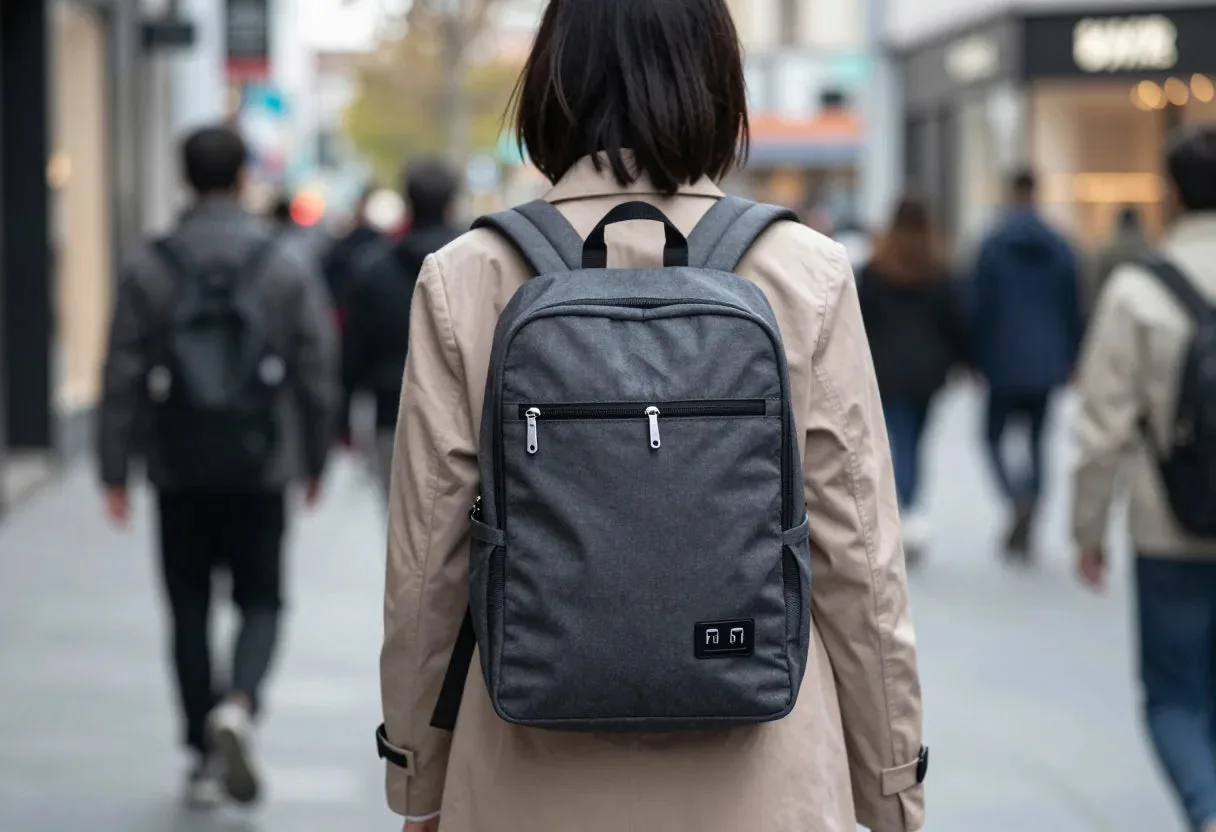
Someone opened my backpack on a tram in Lisbon, in the middle of the afternoon, between two stops, and that is where my search for the best anti-theft backpack began. I did not feel it. I only noticed when I got off, when I saw the zipper open ten centimeters (four inches) and the wallet pocket empty.
What struck me most was not the theft. It was understanding how easy it had been. The bag was on my back, the zipper on top, at hand height for the person behind me. I had set up the perfect conditions myself.
Since then, I have bought three so-called anti-theft bags. One excellent, one decent, one I resold after a month. Here is what I learned about what really protects on the best anti-theft backpack, and about what only serves to justify the price. I carry a women’s model, an anti-theft backpack for women, but most of what follows applies to any bag.
- What an anti-theft bag protects, and what it does not
- The five features, ranked by what they really did for me
- RFID: I paid for it, I would not do it again
- The bag I sold, and why
- Which size for which use
- What changes on an anti-theft backpack for women
- The habits that made more difference than the bag
- The questions I get asked
What an anti-theft bag protects, and what it does not
I may as well say it straight away, because I have read a lot of exaggerated promises. An anti-theft bag does not protect against a violent robbery or against a snatch. No bag does that.
What it protects against is exactly the Lisbon scenario. A brief contact in a crowd, a zipper opened a few centimeters, a hand that takes whatever is on top. The victim notices nothing at the time. It is by far the most common case, and it is the one a good bag makes almost impossible.
The way I put it now is that it is not about making your bag impossible to get into, it is about being a harder target than the person next to you. A pickpocket always picks the easiest bag, they only have a few seconds.
The five features, ranked by what they really did for me
1. The back opening, the one that changed everything
The main opening is on the side that rests against your back. As long as the bag is worn, it cannot be reached, period. It is the only feature that does not depend on my vigilance, and that is why I rank it far ahead of the others. The women’s anti-theft faux leather backpack, a professional model, has its main opening hidden against the back.
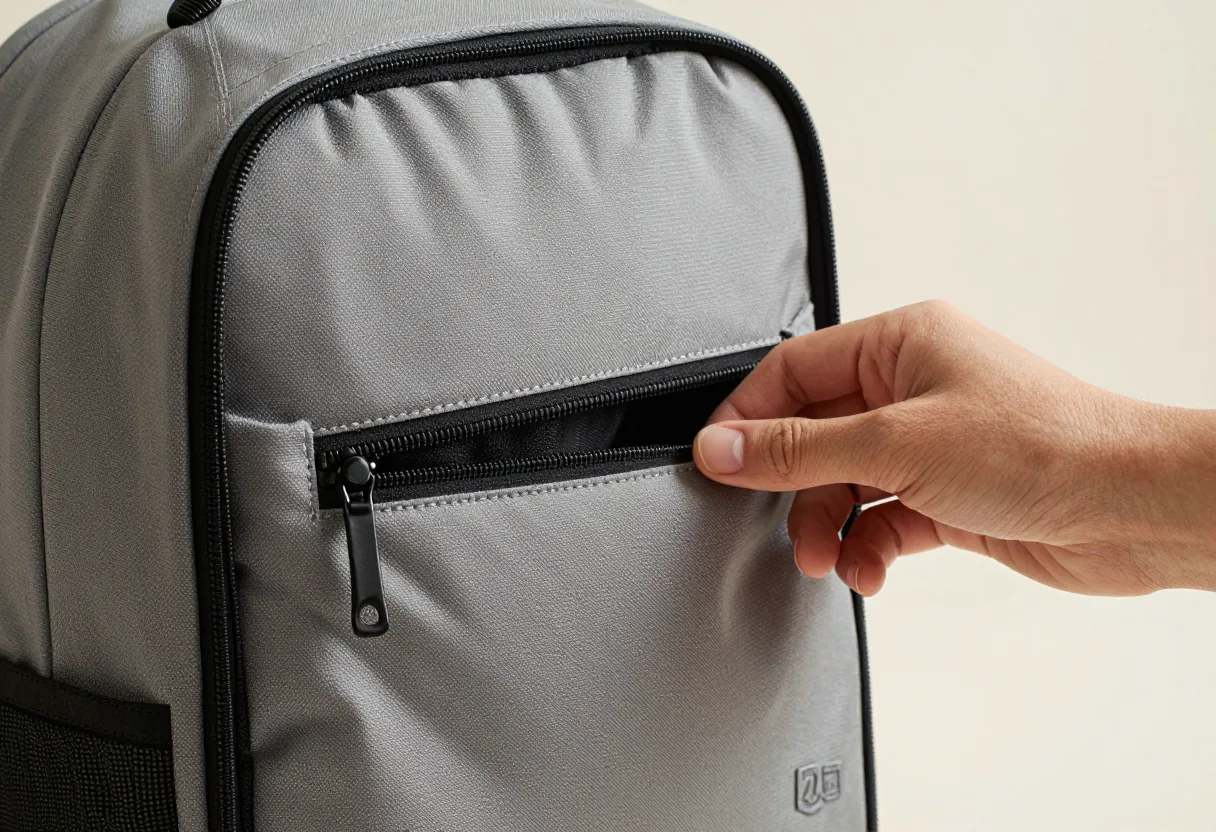
The trade-off is real and I am not going to play it down. To get anything out, you have to take the bag off. On a trip where I open my bag twice, it is perfect. On a trip where I open it ten times, it is unbearable, and I come back to that below.
2. Zippers hidden under a flap
This is what I use every day, and it is my best compromise. The zipper pulls slide under a tab of fabric or clip together. They stay within reach, but it takes two movements instead of one. That is more than enough to put off a furtive hand in a subway car.
A detail I had missed is that a highly visible combination lock has the opposite effect to the one you want. It signals that there is something worth protecting. I took one off mine.
3. Cut-resistant fabric
A metal mesh in the lining. It was on my travel bag, and honestly I never needed that protection. The risk it targets, slashing with a box cutter, is very rare in Europe. It does have one concrete drawback, though. It makes the bag heavier, and it got me two manual bag searches at the airport security scanner.
I would keep it for a long trip to a specific destination. Not for going to the office, where other criteria count. I go through them in my guide to the work backpack for women.
4. The hidden pocket for documents
A small feature with a big benefit. A flat pocket against the back, or zipped under the lining, for your passport and a backup card. It costs almost nothing to make. The only thing to check is that it is big enough for a passport, which was not the case on one of my bags.
5. The security cable
I used it once, on a night train, and I was glad to have it. That said, it can be cut in a few seconds with the right pliers. It is a deterrent, not protection. I would never choose a bag for that.
RFID: I paid for it, I would not do it again
It is the feature pushed hardest on product pages and the one that disappointed me most. I paid an extra twenty euros or so (about $23) for an anti-RFID lining.
What I have understood since is this. Fraudulent contactless reading does exist technically, but the useful range of a reader is a few centimeters (an inch or two), the amounts are capped, and authentication is required beyond a certain total. A shielded sleeve costs a few euros (a few dollars) and slips into any bag.
If a model you like for other reasons has it built in, all the better. Paying for that alone, no. The real risk to a bank card, the one I lived through, is that someone takes the card. And that is what the closure takes care of.
The bag I sold, and why
This may be the most useful part of everything I can tell you, because it is about a trap I have not seen mentioned anywhere.
I had bought a bag with an opening fully on the back, very well designed, truly secure. Except that I took my phone out about fifteen times a day, my transit pass on every trip, my keys when I got home. Taking the bag off every time was impossible.
After three weeks, I was wearing it on one shoulder, the bag pulled around in front of me, and I left it half open so I did not have to fight with the zipper. In other words, I had bought a very secure bag and I was using it in the least secure way possible. The security on paper had dropped to zero.
The lesson I draw from it, and that I believe holds beyond my own case, is that a daily constraint always ends up being worked around. You have to calibrate the protection to the real trip, not to the worst scenario you can imagine.
- Commuting on crowded transit: hidden zippers, plus a quick-access front pocket for your phone and transit pass. It is the combination that lasts, the one I kept.
- Sightseeing in a busy city: here yes, a back opening, and a hidden pocket for documents. You open your bag three times a day, so the constraint is acceptable.
- Low-risk use: simple zippers under a flap are enough, and do not sacrifice comfort for the rest.
Which size for which use
- 10 to 15 liters: a day out in town, a day of sightseeing. Compact and discreet. It is what I take when I travel now, and I think discretion counts as much as the feature.
- 15 to 20 liters: the daily commute with a laptop. Be careful, the anti-theft feature does not replace a padded compartment. My first anti-theft bag protected my laptop very well from theft and very badly from knocks.
- 20 to 30 liters: travel, carry-on. At this size, look for a wide, suitcase-style opening, otherwise getting at your things becomes an ordeal.
One point I would not have guessed is that a very large bag is actually more vulnerable in a crowd, because you feel much less of what is happening on it. My small, well-closed bag feels safer to me than my big armored one. The anti-theft backpacks collection covers these different sizes.
What changes on an anti-theft backpack for women
I thought it was only marketing. It is not, and I found that out by trying the two versions of the same model.
- Contoured shoulder straps. On the standard version, they kept sliding off the outside of my shoulders. On the so-called women’s version, narrower at the base and curved, the problem had gone. It is not subjective.
- Back height. A bag that is too long drops down onto your behind and throws you off balance. A back height of around 40 to 44 cm (about 16 to 17 in) suits me well, for someone of average height.
- A height-adjustable chest strap. Far from standard, and it is what makes the difference between a useful strap and one that gets in the way.
- A slim profile. Anti-theft bags tend to be thick because of the reinforcements. A flat model is easier to wear on transit and draws less attention.
On style, I will be honest. Most anti-theft bags go for a technical look, gray or black, that does not go with everything. It is the compromise I accepted when traveling and refused for every day. For the days when I want something dressier, I take a city model with hidden zippers. The level of protection is in between, and I accept that.
The habits that made more difference than the bag
It is a little galling to write after buying three bags, but four habits have probably protected me more than any feature.
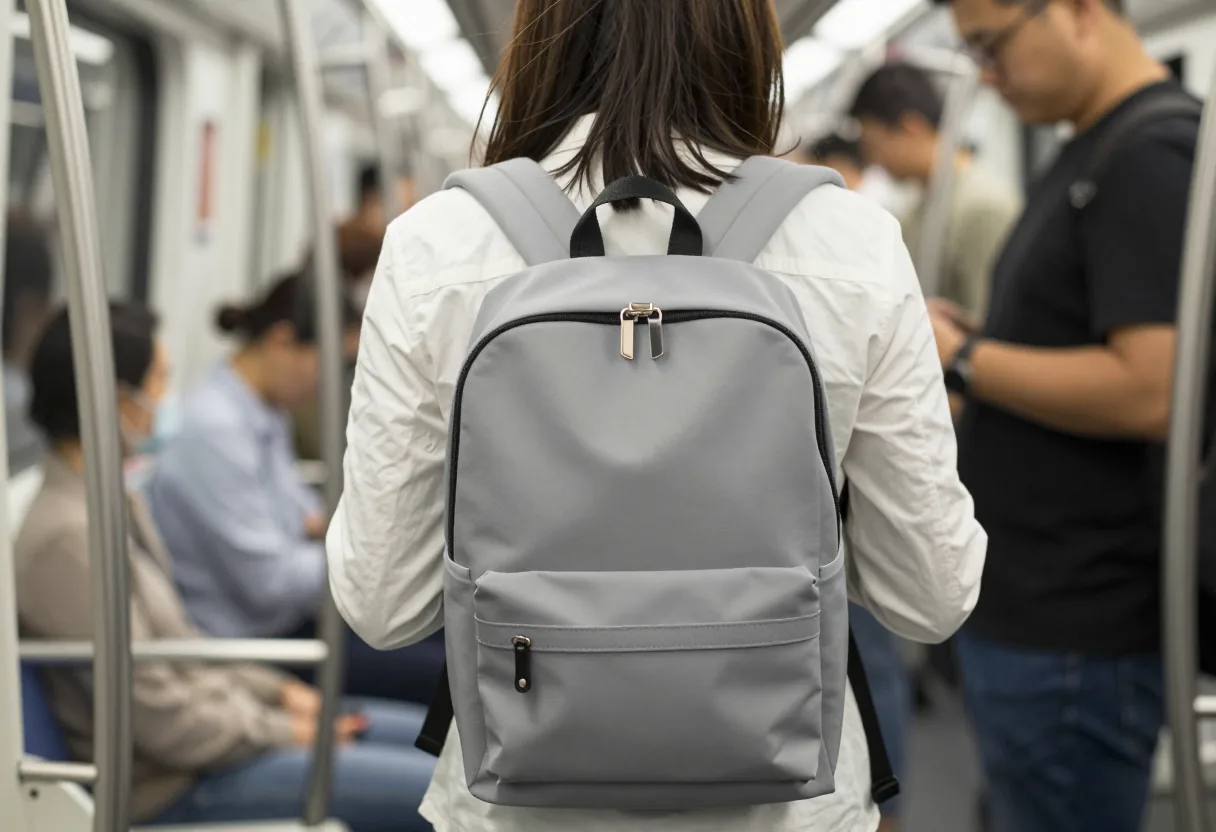
- Move the bag to your front in a dense crowd, on a packed platform, at a market. It is what I had not done in Lisbon. It is free and it is the most effective move of all.
- Do not put everything in the same place. A card and a little cash in a separate pocket. In Lisbon, I lost everything at once and my day ended there.
- Do not put the bag down behind you at a café. On your lap, or with a strap looped around the chair leg.
- Photograph your documents and keep the copies online. It does not prevent anything, but it cut the time I spent at the consulate to a third.
The questions I get asked
Do anti-theft bags actually work?
Against discreet theft in a crowd, yes, and I say it with the conviction of someone it happened to before and never since. Against a violent robbery, no, and nobody serious claims otherwise. The aim is to be less easy than the bag next to you.
Anti-theft or anti-pickpocket, what is the difference?
None in practice, the two words mean the same thing. I just find “anti-pickpocket” more honest about what is really covered.
Can you take one as a carry-on?
Yes, within the airline’s size limits. Something I have been through is that models with a metal mesh sometimes set off a manual check at the security scanner. It is not forbidden, but allow five extra minutes.
Is an anti-theft bag waterproof?
Not necessarily, they are two separate things and I confused them for a long time. Many anti-theft models are water-repellent, which is enough for a rain shower. For more, you need sealed seams, or a look at our waterproof backpacks collection.
How do you secure an ordinary backpack?
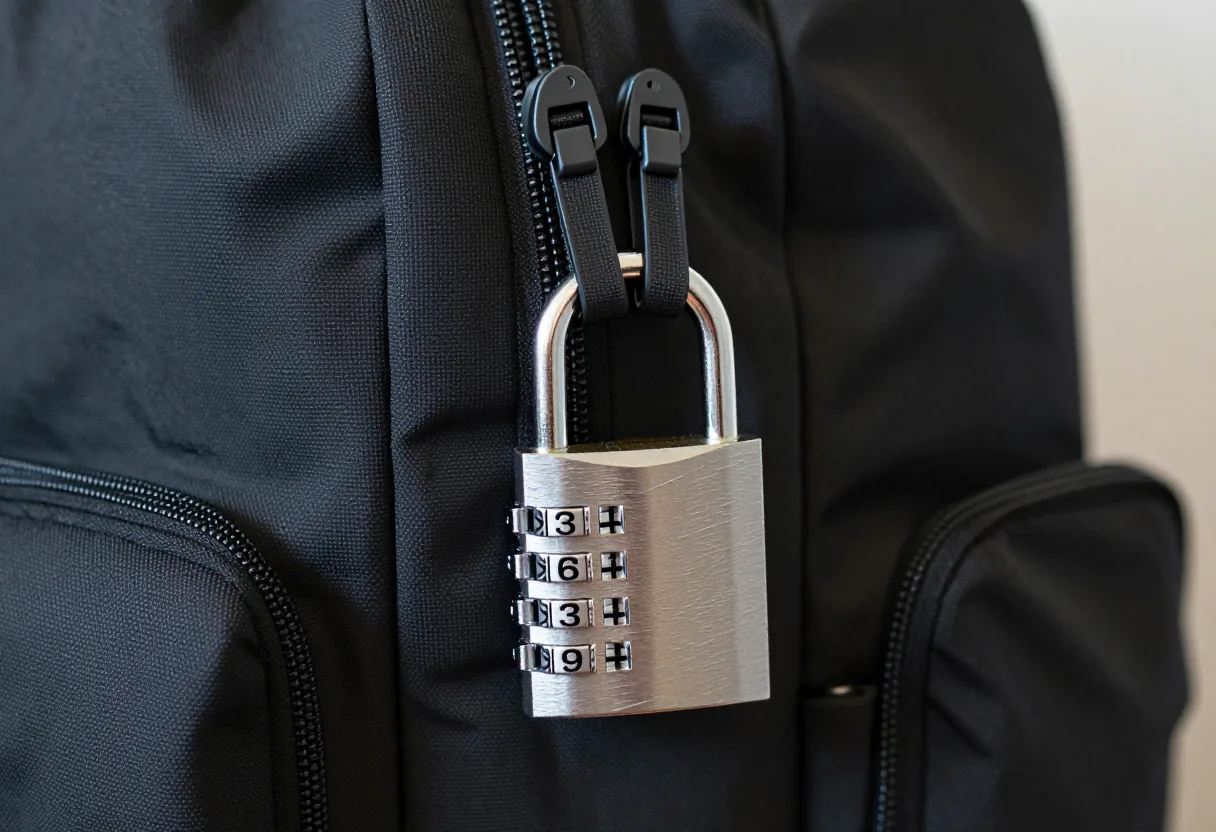
Three things I did before buying a dedicated model, and they work well. Put the zipper pulls at the bottom and against your back rather than on top. Lock them together with a small combination lock. And always put your wallet and phone in the deepest pocket, never on top. It is not as good as a back opening, but it rules out the three-second theft, which is the one that happened to me.
So what is the best bag to not get robbed?
For me, a good anti-theft bag is three things. An opening that cannot be reached while the bag is worn or that takes two movements, a hidden pocket for documents, and carrying that is comfortable enough that I still use it properly after three months. That last point is the one I underestimated, and it cost me a bag.
The rest, security cables and RFID, is mostly about peace of mind. That is not nothing, but it is not worth sacrificing carrying comfort for.
And the best reflex is still the simplest, the one I did not have on that tram. In a crowd, the bag goes in front.
Further reading
- See all our anti-theft backpacks
- The professional anti-theft faux leather backpack for women with a back opening
- The whole collection of backpacks for women