
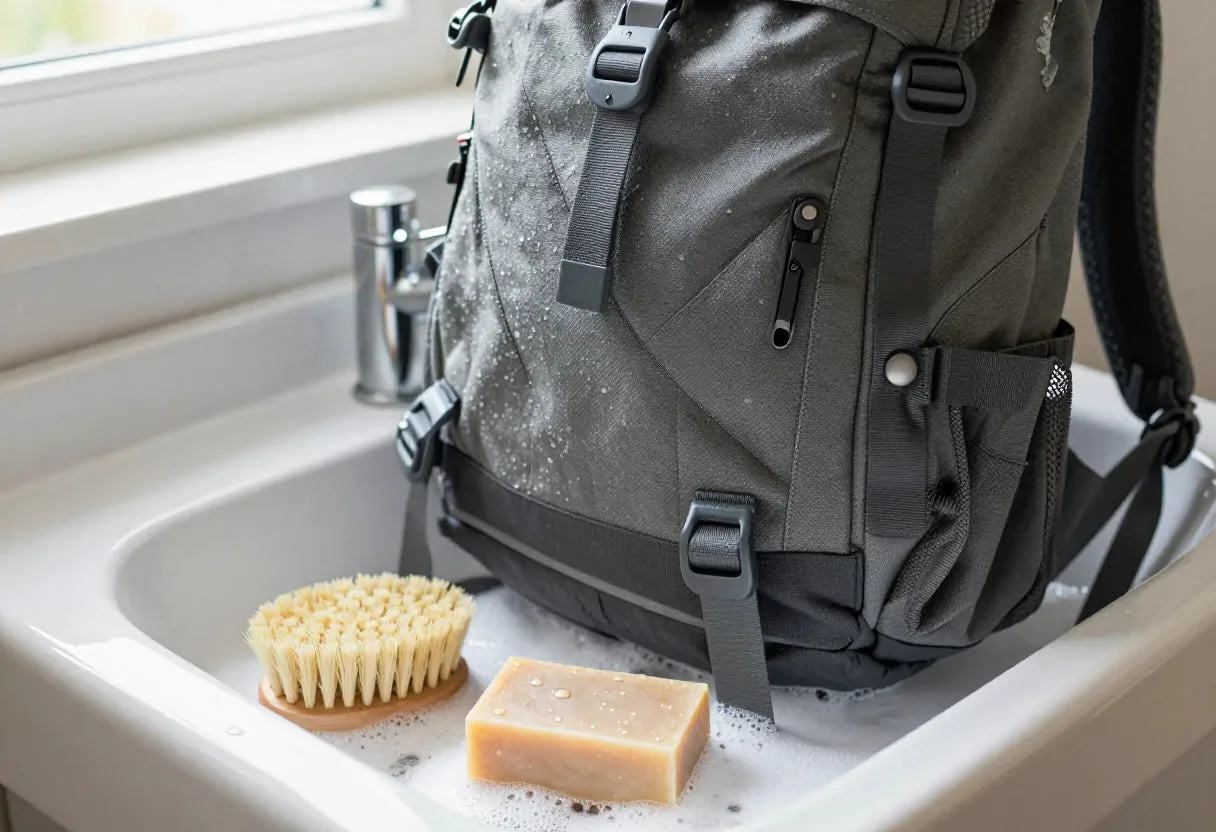
Before I knew how to wash a backpack, I destroyed one by washing it. A hiking backpack, on a 60°C cotton wash, with a normal dose of detergent and a 1,200 rpm spin. It came out with its water-repellent finish gone, two seams split open and a bent frame. It was three years old and in perfect condition before that.
Since then I wash my bags differently, and I have realised that most people around me make the same mistake I did. They treat a backpack like a piece of clothing. It is not one. It has foam padding, a frame, surface treatments and load points that cannot take what a T-shirt takes.
So here is how I wash a backpack now, by hand or in the washing machine, material by material, with the mistakes I made and what each one cost me.
- How to wash a backpack: my method, step by step
- Getting a backpack ready before you clean it
- Washing machine or hand wash: how I decide
- How to clean each backpack material
- Mistakes to avoid when washing a backpack
- How to wash a backpack without ruining it
- How to dry a backpack, the step where I got it all wrong
- The cleaning products I really use
- How often I wash my backpacks
- Questions about washing a backpack
How to wash a backpack: my method, step by step
It takes three quarters of an hour of actual work, plus a night of drying. The drying is the longest part, and that is exactly where you are tempted to cheat.
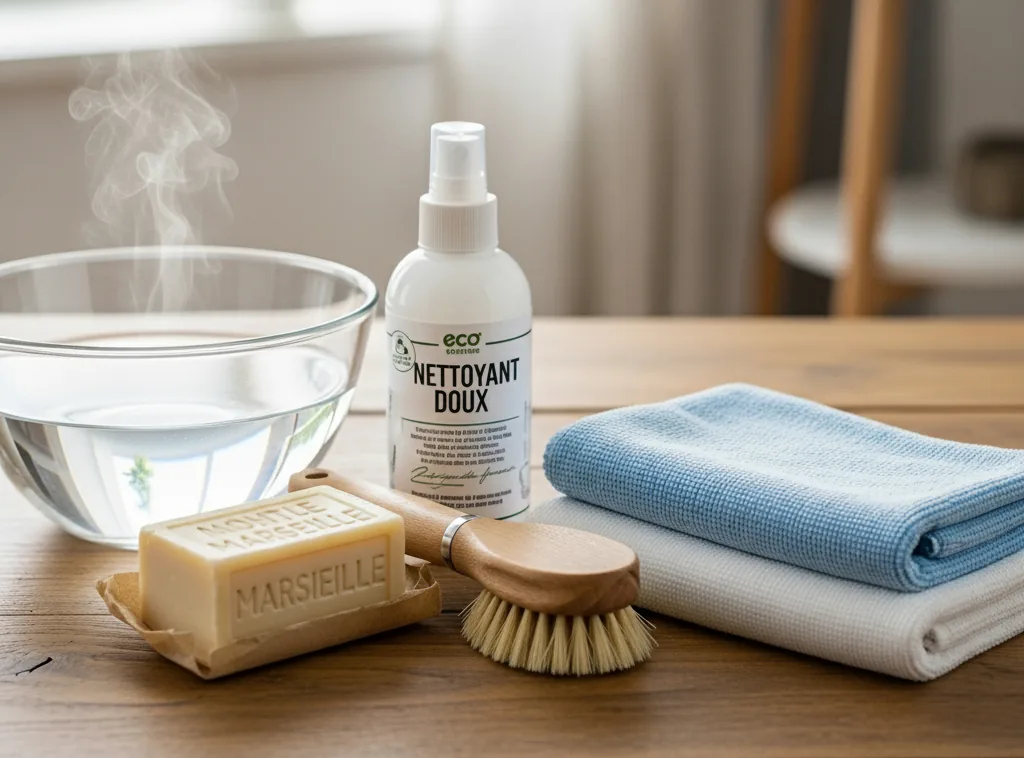
The kit I get out every time
Nothing exotic, it can all be found in a kitchen or a hardware shop:
- A mild soap or Marseille soap. For a long time I used liquid detergent, and it is too harsh for technical fabrics.
- A soft-bristled brush. A hard brush scratches coatings, as I learnt on a waterproof bag.
- Two microfibre cloths, one wet and one dry.
- Lukewarm water, never hot. 30°C at most.
Getting a backpack ready before you clean it
This is the step I used to rush, and it is the one that decides the result.
Empty the bag and every compartment completely
Completely means completely. I once washed a bag with a pen forgotten in a side pocket. The ink ran all over the lining and I never got any of it back. Now I open every zip, turn the bag upside down over a bin and shake it. Something always falls out, sand, crumbs, sometimes a coin. A vacuum cleaner run gently along the seams and into the corners of the pockets then lifts the grit that shaking leaves behind.
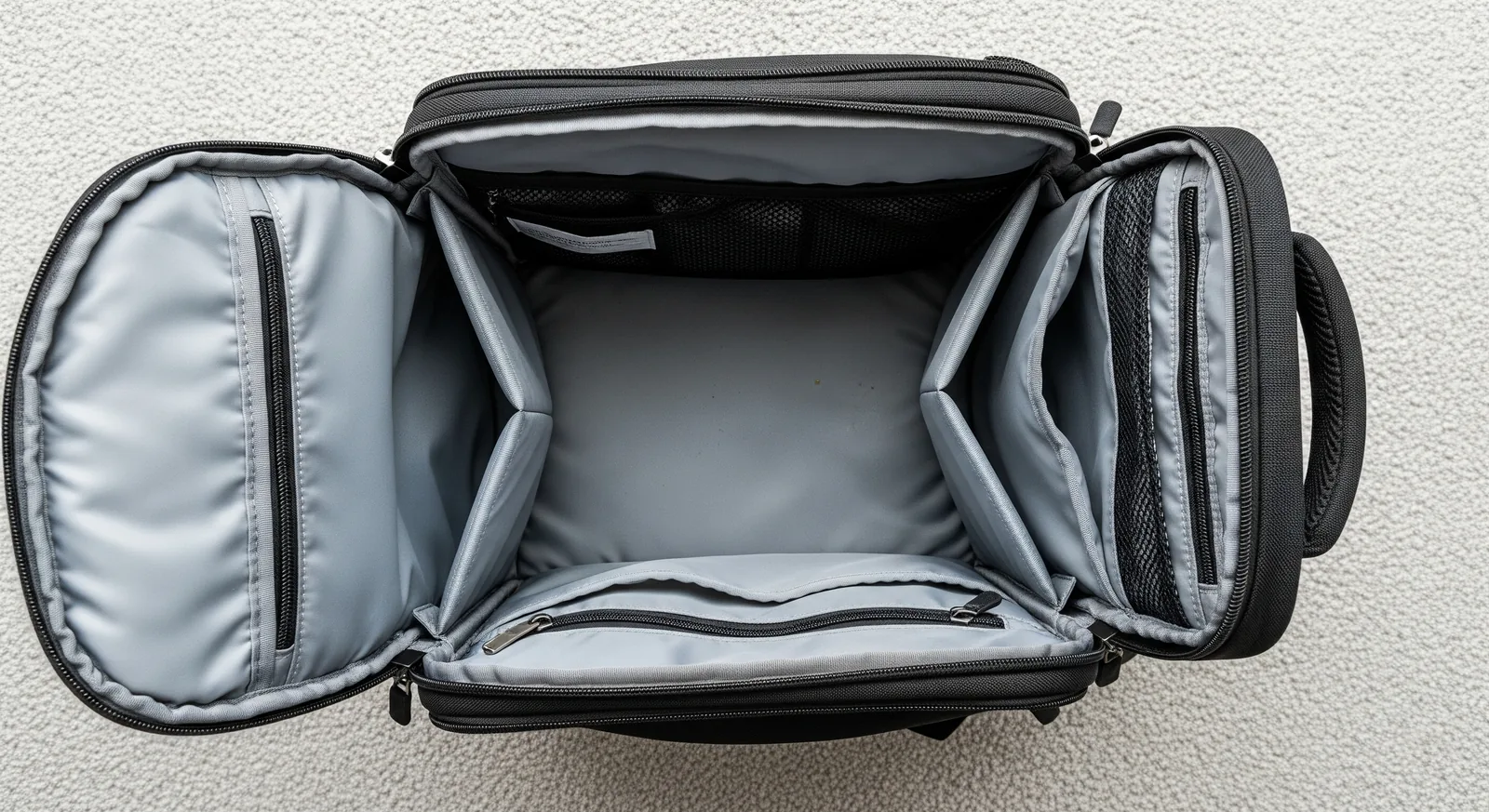
The second thing I do is remove everything that comes off: the frame, the hip belt, the rain cover. These are the most fragile parts in a washing machine. Detachable shoulder straps and pockets can come off too, and be washed separately.
Check the fabric and the care label
The label is often in an inside pocket, sewn near the bottom seam. I had never looked for it before my accident. On the bag I destroyed, it said “hand wash only” in full.
If the label has gone or cannot be read, my default rule is simple. Hand wash. You lose nothing by being careful, and you have everything to lose by not being.
Some labels go further and say the bag must not be soaked at all. In that case it skips the bath and gets a damp cloth with a little mild soap instead, then a clean wet cloth to take the soap off.
Treat the worst stains first
Before the full wash, it is worth working a little mild soap into the worst marks with the soft brush, gently, and leaving it a few minutes. No bleach, even on a stubborn stain.
Washing machine or hand wash: how I decide
The only bags I still put in the washing machine are simple polyester or nylon ones, with no frame, no thick foam and no waterproof membrane. A school bag, a small city bag. Everything else is washed by hand.
How to wash a backpack in the washing machine, when I risk it
- Close every zip, otherwise the sliders catch on the drum.
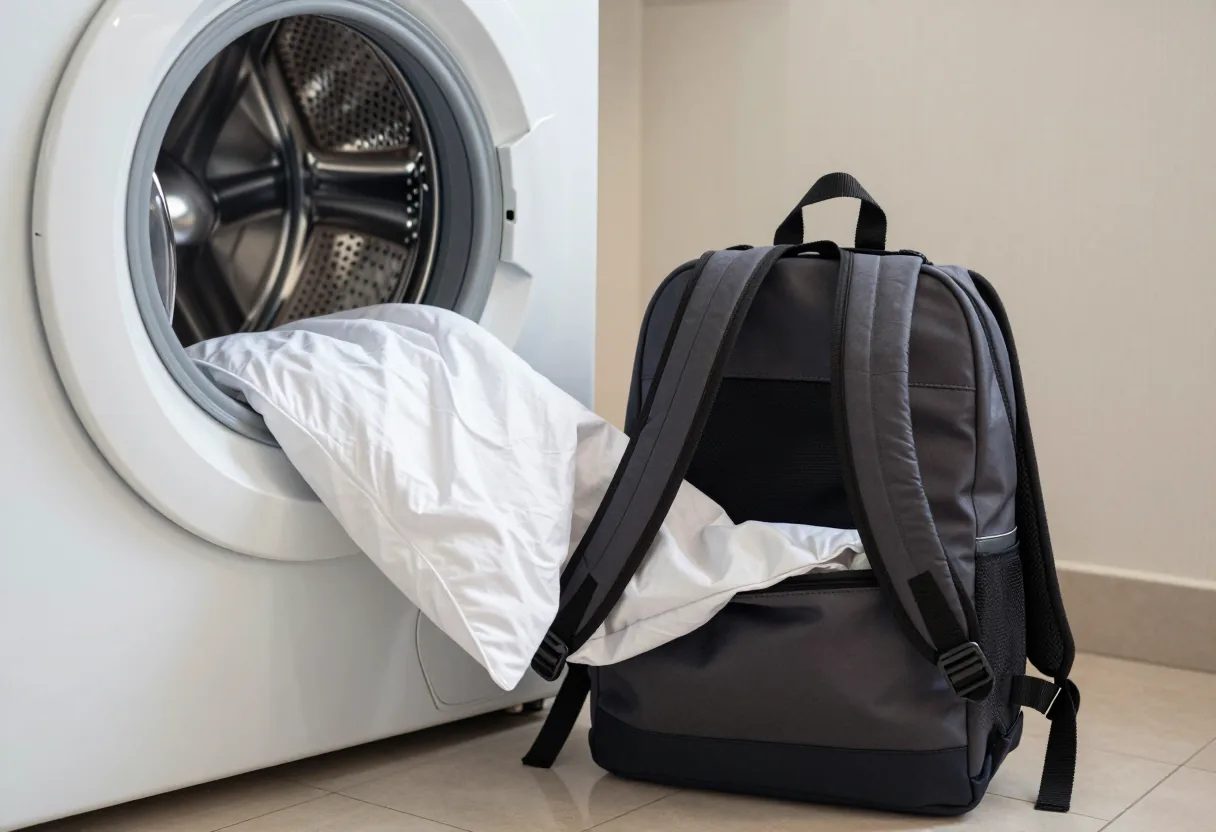
- Turn the bag inside out and slip it into a closed pillowcase. It is the tip that has served me best, because it protects the straps and the buckles.
- Delicate programme, 30°C at most, spin at 400 rpm or no spin at all.
- Half a dose of gentle liquid detergent. Washing powder leaves white residue in the seams.
- No fabric softener. It clogs the pores of technical fabrics and kills the water-repellent finish.
How to wash a backpack by hand, as I do for everything else
- Fill the bath or a large tub with ten centimetres of lukewarm water and a little mild soap.
- Submerge the bag and leave it to soak for a quarter of an hour. No longer, because after that the water ends up getting into the back foam and drying takes forever.
- Brush gently, one area at a time, working hardest on the base, the shoulder straps and the back panel, which are the three really dirty places.
- Rinse thoroughly. This is the point I used to miss. Any soap left behind leaves white rings as it dries, and there is always more left than you think.
- Press the water out without wringing. Wringing bends frames and breaks foam.
How to clean each backpack material
Canvas and cotton
The most forgiving. A 30°C machine wash is possible on models without a frame. They shrink a little on the first wash, which surprised me on a thick canvas bag. It came back slightly stiffer and a centimetre shorter. Nothing serious, but worth knowing.
Technical fabrics and waterproof bags
Never in the machine, never with ordinary detergent. Ordinary soap attacks the water-repellent finish, and the bag starts soaking up water instead of shedding it. Hand wash, lukewarm water, very mild soap, careful rinse. Once the bag is completely dry, I reapply a waterproofing spray, because that is what gives the fabric back its original behaviour. The models in our waterproof backpack collection need this treatment once or twice a year.
Leather
No machine and no soaking, ever. A barely damp cloth, a soap made for leather, then a conditioning cream once it is dry. I have set out the whole routine in my guide on how to clean a leather bag, because it is a subject in its own right. Models such as the women’s lambskin leather backpack for the city, or the women’s sheepskin leather backpack in genuine leather, are cared for this way only.
Nubuck and suede
No water, no soap. A nubuck brush and a special eraser, and that is all. I left a permanent shiny patch on a suede panel by trying to do the right thing with a damp cloth.
Mistakes to avoid when washing a backpack
Temperature, the one that cost me a bag
Sixty degrees was my mistake. Heat softens the glues that hold the back foam, lifts the heat-sealed seam tape on waterproof bags and shrinks coated fabrics. 30°C is a ceiling, not a cautious recommendation.
Harsh products
Here is what I have tried and will not do again: bleach (it fades and weakens the fibres), fabric softener (it clogs technical fabrics), washing powder (residue in the seams) and chlorine stain remover. A friend cleaned a bag with glass cleaner, and it ate the screen-printed markings in one go.
Can a backpack go in the tumble dryer?
No. It is the most destructive mistake of all, and the most tempting. The hot tumbling air pulls the glued foam loose, melts the plastic parts and bends the frames. No backpack goes in the tumble dryer, including the ones that go in the washing machine.
How to wash a backpack without ruining it
Protect the zips and the straps
I close everything before washing, and I put a drop of silicone lubricant on the zip teeth once the bag is dry. It is a thirty-second habit that has extended the life of zips I thought were finished. Of my three bags used until they wore out, it was always the zip that gave way first.
Keep the bag waterproof after washing
A simple test tells you where you stand. Pour a little water on the fabric. If it beads and rolls off, the water-repellent finish is holding. If it spreads and darkens the fabric, the finish has gone and the bag needs reproofing. I do this test after every wash, which saves me discovering the problem in the rain.
How to dry a backpack, the step where I got it all wrong
It is the part that takes time, so it is where people cheat, so it is where things get broken.
How I dry my bags now
- Hung upside down, open, with every zip undone, in a well-aired room.
- Never in direct sun, which fades and weakens synthetic fibres.
- Never on a radiator or with a hairdryer. That is how I stiffened a leather bag until it cracked.
- Newspaper inside to soak up the last of the moisture, changed once after a few hours.
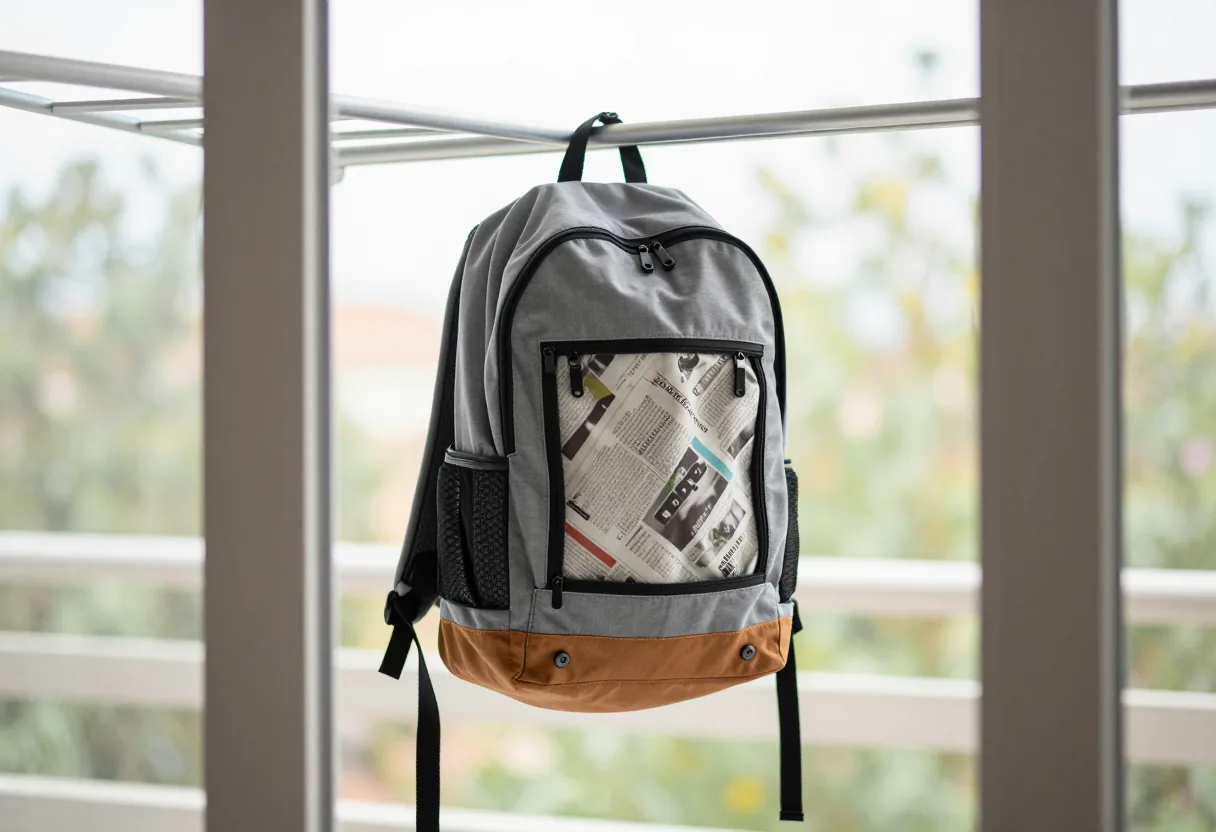
How long a backpack really takes to dry
A small canvas bag dries overnight. A hiking backpack with back padding easily takes two days, and it feels dry long before it is. The test I use is to squeeze the back panel hard between my hands. If there is the slightest damp coolness left, it is not done. A bag put away damp goes mouldy, and it has happened to me.
The cleaning products I really use
Mild detergents
A neutral liquid soap, or a detergent made for technical fabrics when I have some. For waterproof bags there are dedicated cleaners that leave the water-repellent finish alone, and it is the only case where I find the specialist product worth its price.
Home remedies that work
- Bicarbonate of soda: a tablespoon left overnight in a closed bag neutralises odours. It is what saved my gym bag.
- White vinegar diluted half and half: effective on mould marks, on fabric only, never on leather.
- Marseille soap: enough for the vast majority of everyday stains.
I stopped using the essential oil recipes found online. They leave greasy rings on light fabrics.
How often I wash my backpacks
Less often than you might think, in fact. Every full wash wears the bag a little, and routine care does almost all the work.
- City or school bag: a full wash every three or four months. In between, a damp cloth over the dirty areas.
- Gym bag: more often, but above all aired after every session. Airing is what deals with the smell, not washing.
- Hiking backpack: a quick spot rinse after every muddy outing. A full wash once or twice a year is enough.
- Leather bag: never washed. A gentle clean and conditioning cream, twice a year.
What I do without fail, on the other hand, takes two minutes. I empty the bag and turn it upside down every week. Sand stuck in a seam wears the fabric with every movement, and you cannot see it until the day the seam gives way.
Questions about washing a backpack
Can you put a backpack in the washing machine?
Some backpacks, not all. Simple polyester, nylon or canvas backpacks with no frame, no thick foam and no waterproof membrane can go in, if the care label allows it. Use a delicate programme at 30°C at most, a closed pillowcase, half a dose of gentle liquid detergent, a low spin or none, and no fabric softener. Technical fabrics, waterproof bags, leather, nubuck and suede never go in the machine. Several outdoor brands advise against machine washing their own packs at all, so the label always has the last word.
Should you wash a backpack with the zips open or closed?
In the machine, I close them, because open sliders catch on the drum, and the bag goes in inside out in a closed pillowcase. Some brand guides advise the opposite, with the pockets unzipped inside a laundry bag. If your care label says which, follow it. For drying there is no debate. Every zip open, bag upside down.
How do you get rid of a smelly backpack?
Empty it, open every pocket and let it air, outdoors in the shade for a few hours if you can. Then a tablespoon of bicarbonate of soda left overnight in the closed bag neutralises odours. That is what saved my gym bag. If airing and bicarbonate of soda are not enough, wash the bag, and above all dry it completely, because a bag put away damp grows mould and starts to smell again. On mould marks, white vinegar diluted half and half works on fabric, never on leather.
How do you clean a backpack without washing it?
Between full washes, a quick clean does most of the work. Empty the bag and shake it upside down, wipe the inside with a clean damp cloth, rub any marks on the outside with the cloth and a little mild soap, then wipe the soap off with clean water. Leather, nubuck and suede follow their own rules, set out above.
What I keep in mind
30°C at most, a pillowcase if the bag goes in the machine, no fabric softener, and above all slow drying in the open air. That is roughly all there was to know, and it is exactly what I did not know the day I started a 60°C cotton wash.
The rest comes down to a ridiculously simple habit. Empty your bag and turn it upside down once a week. Since I started doing that, I wash far less often, and my bags last much longer.